The Barbell Prescription
My Personal Takeaways →The Barbell Prescription: Strength Training for Life After 40
By Jonathon M Sullivan and Andy Baker
Introduction Resistance is Not Futile
-
In recent years, we’ve seen an explosion of published biomedical evidence on resistance training in the aged, in women, in children, and in people suffering from a broad spectrum of health conditions, ranging from diabetes to hypertension to congestive heart failure to Parkinson’s. What this growing body of data tells us is that everybody who can lift weights should lift weights. This most emphatically includes those in their 40s and beyond.
-
Strength training can slow, arrest or even reverse many of the degenerative effects of aging: loss of muscle and strength, brittle bones, floppy ligaments, dysfunctional joints, and the decline of mobility and balance. Instead of losing lean mass and replacing it with fat, healthy aging can be characterized by the retention or even addition of healthy, functional tissue. You can think of every bout of strength training as a prudent deposit into a “Physiological 401K”: saving strong muscle, hard bone, and full mobility for your retirement.
-
This book is both a prospectus and a training manual. It is theory and practice, an evidence-based case for why you should invest the time and effort to learn a few basic barbell and conditioning exercises, and a practical examination of exactly what must be done and how these exercises can be incorporated into a complete, lifelong training program.
-
For too long, aging has been an excuse to take it easy, to avoid the “dangers” of over-activity, to act your age, to resign to the inevitability of decline, and to consider yourself fit for your age if you could get through a few holes of golf or hobble around the park twice a week.
-
We’re not promising perfect health, or even longevity. Getting strong won’t bring back your eyesight, restore your bald spot, shrink your prostate, or smooth your wrinkles. Aging always ends in decline and death. Bad luck and disease can strike down even the strongest, just as a bad market can ruin a rich man who has invested wisely. But getting old, even very old, doesn’t have to guarantee frailty, loss of independence, weakness and misery. It is possible, in fact it is essential, to save strong healthy tissue for the years when we’ll need it most. With discipline, hard work, and a little luck, we can compress the morbidity of aging into a tiny sliver of our life cycle, remaining strong and resilient well into our final years. Instead of dwindling into an atrophic puddle of sick fat, we can make our ending like a failed last rep at the end of a final workout. Strong, vigorous and useful, to the last. Time always wins in the end. But we hope to convince you that resistance is not futile.
Part 1: WHY (From Exercise Prescription to Training Program)
Chapter 1: The Sick Aging Phenotype
-
Aging in the postmodern era can result in either the healthiest “seniors” the world has ever seen, or a ghastly and increasingly common syndrome of maladaptive aging, which we shall call the Sick Aging Phenotype. The Sick Aging Phenotype is a complex of interrelated and synergistic processes, in which the metabolic syndrome, muscle and bone loss, frailty, loss of function and independence, and an ever-growing stew of pharmaceuticals conspire to destroy the health and quality of life of the aging adult.
-
Two organisms of the same species with identical or nearly identical genotypes will tend to have very similar phenotypes. But their phenotypes can also be very different.
-
Modern aging and death phenotypes are increasingly the product of abundance, longevity and idleness, with the major cardiovascular diseases (including stroke) being by far the number one cause of mortality. Cancer runs second, while diabetes, Alzheimer’s, and respiratory diseases bring up the rear. When infectious diseases do kill us, they tend to do so at the extremes of age and ill health.
-
The Sick Aging Phenotype is complex, but it can be summed up in a few words: metabolic syndrome, sarcopenia and osteopenia, frailty, and polypharmacy.
-
The metabolic syndrome is a key driver of unhealthy aging in developed countries.
-
This plague affects 25 to 30% of the population of North America. In medicine, a syndrome is a constellation of symptoms, findings, and disorders that tend to occur together.
-
Components of the Metabolic Syndrome:
- Visceral obesity: accumulation of fat around the internal organs. This change is highly correlated with the more visible truncal obesity, variously defined by the (rather crude) metrics of waist-hip ratio or BMI.
- Insulin Resistance and Hyperglycemia: loss of cellular sensitivity to insulin signaling leads to numerous derangements. This includes diabetes or a pre-diabetic state characterized by poor serum glucose control.
- Hypertension: elevated blood pressure.
- Dyslipidemia: derangement in serum triglyceride (fat) and HDL/LDL (cholesterol) levels.
- Inflammation: This is not a classical component of the metabolic syndrome, and is not used in most established definitions. I include it here because of the increasing recognition that metabolic syndrome involves chronic over-activation of cellular and biological defense mechanisms that cause pain and damage to tissues.
-
People with metabolic syndrome or its components are more likely to become frail, to suffer from stroke, cardiovascular disease and heart attack, to develop heart failure, to develop kidney failure, and to suffer from erectile dysfunction, depression, loss of independence, and premature death.
-
The behaviors that affect our weight are what we eat, how much we eat, and how much energy we burn off through physical work and exercise.
-
Increased energy intake and sedentary lifestyle (eating too much and sitting on your butt all day, not to put too fine a point on it) upset the energy balance of the body.
-
This is even more catastrophic than one might think, because insulin isn’t just a glucose-regulating hormone. Its effects are far deeper and more fundamental than that. Insulin is a growth factor. When it binds to its receptor it triggers not just glucose uptake, but also a network of powerful growth and survival responses, both in cellular chemistry and at the genetic level. Insulin signaling tells tissues that they are in a fed state, and it tells the body that the circumstances are ideal for growth, development, and repair. Insulin resistance in the setting of overeating and sedentary lifestyle sends an inappropriate and paradoxical message that the organism is unfed.
-
Unused, detrained muscle downregulates insulin receptors, turns off protein synthesis, and begins to eat itself to provide calories and amino acids to the rest of the body, which, because of decreased insulin signaling, thinks it’s hungry. The result is a progressive loss of muscle tissue and strength. Activity becomes more tiring and more uncomfortable. The organism becomes more inactive. And so on. This vicious cycle affects many tissues, not just muscle. Tendons and ligaments lose their stiffness, becoming weaker and more susceptible to strain and injury.
-
Hyperglycemia eventually slides into full-blown diabetes, and Phil needs oral hypoglycemic medications like metformin or glyburide to control his blood sugar. These medications are effective for a while, but they don’t get at the real root of Phil’s disease, and they have significant, occasionally fatal side effects.
-
When I see patients who display this phenotype in the emergency department, they invariably present with a plastic bag full of powerful medicines, many of which work antagonistically or synergistically in unwholesome ways.
Chapter 2: Exercise Medicine
-
Exercise has beneficial effects at every stratum of biological organization, from the molecular and cellular levels to the realm of neuropsychiatric health.
-
Exercise is the medicine that actually gets to the root of the Sick Aging Phenotype, instead of just treating its symptoms.
-
“Medicine” has become almost synonymous with “drug,” and “health care” has come to mean “going to a doctor to find out what pills to take.”
-
Modern drugs don’t get to the root of the problem. And they never will. Because health will never come in a pill.
-
No drug in the world will ever match the power of exercise medicine. No drug in the world will ever confer so many beneficial effects to so many organ systems, at so little cost, with so few side effects.
-
Weight-bearing exercise improves bone density, joint function, tendon elasticity and strength, range of motion, and overall physical function.
-
Exercise improves cardiac stroke volume, decreases resting heart rate, inhibits the development and progression of hypertension, promotes more favorable blood-lipid profiles, and seems to retard the development of peripheral vascular disease, including coronary artery and cerebrovascular disease, with attendant decreases in the risk of heart attack and stroke.
-
There’s an interesting paradox here: intense physical activity actually increases the production of free radicals, just as an engine running at high RPMs generates more exhaust and heat. Yet regular, vigorous exercise reduces actual cellular free radical stress and damage. It appears that exercise-induced oxidative stress promotes healthy biochemical adaptations that increase cellular tolerance to free radicals.
-
The effect of exercise on growth factor release, neurotransmitter systems, vascular signaling molecules, antioxidant molecules, the growth of new cellular power plants (mitochondria), the growth of new blood vessels, and a beneficial effect on the progression of vascular disease in the brain (as in the heart), have all been cited as mechanisms by which exercise promotes brain health, fights cognitive impairment, and impacts on the development of dementia, including Alzheimer’s dementia. Exercise promotes brain plasticity and decreases the loss of brain tissue in aging, and is increasingly prescribed for patients with stroke and Parkinsonism. On the whole, the research literature strongly indicates that exercise is critical for maintaining brain function in aging.
-
On the whole, the preponderance of evidence indicates that exercise, mental health, and a better life all tend to go together, which should surprise exactly nobody.
-
A rapidly growing body of research has demonstrated the positive effects of physical exercise in patients with a broad range of pathologies: hypertension, heart failure, kidney disease, cancer, diabetes, depression, osteopenia, arthritis, dementia.
-
The primary power of exercise is its ability to prevent disease. Any disease state, once established, is likely to involve structural, epigenetic, and systemic changes that make reversal difficult or even physically impossible. The best treatment is to not get the disease in the first place. Exercise clearly decreases the risk of developing metabolic syndrome and cardiovascular disease, and there is tantalizing (but not definitive) evidence that it exerts preventative effects against cancer and some forms of dementia.
-
Aging and degeneration are never cured. They’re managed. Physical inactivity, a principal driver of the Sick Aging Phenotype, can only be treated by regular, vigorous, lifelong exercise. It’s a medicine. But it’s not a cure.
-
Think about the way we dose most medicines. As the patient gets sicker, we increase the dose or, worse still, add another medicine. If the patient improves, the doctor tries to decrease the dose and number of medications (or should). Exercise medicine is the exact opposite. When exercise medicine is used properly, the dose goes up as the patient gets healthier. We start weak and deconditioned. We begin an exercise regimen. Our strength and fitness improve. So we can work out a little harder, increasing the dose. The increased dose improves our strength and conditioning still further, allowing us to increase the dose again. This “inverted dosing” of exercise medicine is incredibly important. It illustrates the principle of progressive overload, which is fundamental to the administration of exercise medicine,
Chapter 3: From Prescription to Program: Safety and Dosing
-
At the most fundamental level, exercise is physical activity. Going for a walk is exercise. Yoga is exercise. Cleaning out the garage is exercise. So are jogging, lifting weights, fencing, badminton, and Pilates. All of these are better than being a couch potato. But it should be obvious that not all forms of exercise are created equal. Put another way, exercise medicine comes in different formulations, with different dosing strengths, routes of administration, efficacies, and side-effect profiles.
-
General Exercise Prescription Criteria: Our exercise medicine must be safe. I trust I’ll get no argument here. Our exercise medicine must have a wide therapeutic window, meaning it should be available in a broad range of effective doses, from low at the beginning of therapy to higher doses as we get healthier. Our exercise medicine must be comprehensive. Our exercise prescription should be as integrated and complete as possible. Our exercise prescription must specifically and effectively combat the Sick Aging Phenotype: It should attack the metabolic syndrome, reduce visceral fat, arrest or reverse sarcopenia and osteopenia, and fight frailty by retaining or restoring strength, power, endurance, mobility, balance, and function. Ideally, it should also reduce the requirements for additional medication (polypharmacy). Our exercise prescription should be efficient and as simple as possible. But no simpler. The prescription must be practical, accessible, and time-efficient. This will promote compliance, enjoyment, and long-term success.
-
Strength training is traditionally and properly conducted with exercises that describe a natural but complete range of motion on a stable surface, using carefully selected loads that increase over time. So properly designed strength training programs avoid unpredictable forces, impacts, and joint moments. Correct strength training is therefore incredibly safe, and well-tolerated by individuals of any age.
-
Exercise medicine must be safe, effective, efficient, quantifiable, and precisely prescribed and administered to achieve specific physiological and performance goals. That’s called training.
Chapter 4: Enduring Resistance, Resisting Endurance: Comprehensive Training
-
We need a program that hits all the General Fitness Attributes: strength, power, mobility, balance, endurance, and body composition.
-
Strength training and endurance training compete with each other for valuable training time.
-
Endurance can be built much more quickly than strength, but it takes committed training time to maintain endurance, which decays far more quickly than strength.
-
In short, aging muscle is characterized by the preferential atrophy of high-power Type II fibers, and the atrophy of these fibers is disproportionately responsible for the loss of muscle mass and strength in aging.
-
Training in the high-intensity, high-power, “anaerobic” range, and in particular strength training, allows the Masters Athlete to hang on to this vulnerable population of fibers, or, if they have atrophied, to return them to the land of the living, and to make them bigger and stronger. This means that high-intensity training, and in particular strength training, will have a powerful effect on the maintenance of muscle mass and strength in the athlete of aging, in a way that aerobic endurance training simply cannot begin to approach.
-
It would appear the unfortunate biological realities of aging indicate training for strength should take precedence over training for aerobic endurance. Training for strength puts us at the high-intensity end of the energy spectrum, and promotes the salvage, retention, and development of the precious high-power Type II muscle fibers that are disproportionately lost as we grow older, maximizing our ability to hold on to muscle mass and function.
-
There are other fitness attributes to be considered besides strength and endurance: power, mobility, balance, and body composition. The Masters Athlete needs them all. And, yes, all of these attributes are addressed more substantively and appropriately by training for strength than by training for endurance.
-
Properly performed and programmed, resistance training increases mobility, our ability to perform within the full and natural range of motion with agility and coordination, by strengthening normal human movement patterns throughout that full range of motion.
-
Correct strength training doesn’t just increase mobility, it actually demands and therefore trains mobility, in a way that running, cycling or even swimming can’t even approach.
-
Further still: properly performed and programmed, resistance exercise trains the General Fitness Attribute of balance, our ability to express normal human movement patterns not just with power, but with stability, safety, and confidence. Correct strength training through the entire range of motion demands and therefore trains our so-called “kinesthetic” perception, which tells us where our body, our body parts, and our center of mass are located relative to the gravitational field and the horizontal reference (the floor). And it demands and therefore trains the contribution of neuromuscular and skeletal components that maintain our center of mass over a stable balance point.
-
We’re talking about what the gerontologists call functioning: the ability to carry out activities of daily life, including the activities that bring us joy and give our lives meaning.
-
Whatever we call it, we’re talking about the ability to get out of bed, snatch a child from danger, lift a box overhead into a cupboard, pick up a heavy bag of groceries, leap for joy, play Frisbee with the dog, remodel the bathroom, row a boat across the fishing pond, or make love to our spouse.
Chapter 5: Specificity and Effectiveness: Your Physiological 401k
-
Although fat loss is associated in the public and medical minds with aerobic exercise, there is growing recognition that resistance training can increase fat loss and decrease fat gains by maximizing muscle mass and muscle energy expenditure.
-
In the world of exercise physiology, cardiovascular fitness is closely associated with the athlete’s VO2max. This quantity represents the maximal rate at which an individual can deliver oxygen to tissues during exercise, and is sometimes referred to as maximal aerobic capacity.
-
Many investigators find that a program of strength training produces only very small increases in VO2max, or no changes at all. These findings underscore the importance of including a conditioning component in our exercise program.
-
No form of exercise that I am aware of is able to cure established hypertension, but it now appears that both aerobic and strength training exert positive influences on this condition.
-
It is now apparent that strength training in patients with heart failure is safe and improves exercise tolerance, function, and quality of life. Moreover, a study by Smart et al. suggests that strength training, characterized by bouts of intense effort interspersed with lighter activity or rest, may be more appropriate for this population than endurance-based aerobic training.
-
On balance, it must be said that the preponderance of available scientific evidence to date indicates that endurance training is probably superior to strength training for the optimization of cardiopulmonary fitness and health.
-
Too often, the aging individual sees that he is getting weaker, and so lowers his expectations and his efforts – and thereby grows weaker still.
-
When you’re sixty or seventy, you’re not going to need to be able to run 20 miles, or 10, or even 3. You’re going to need muscle, bone, strength, power, mobility, balance, and yes, some endurance.
Chapter 6: Simplicity and Efficiency: From Black Iron to Grey Steel
-
Our exercise medicine should be as simple and efficient as possible. The number of exercises should be kept to a minimum. The complexity of programming (the formula for progress in the program) should be kept to a minimum. The program should permit significant progress with 2 to 3 days per week of training, and total weekly training time should be kept to a minimum. Despite its simplicity, the program should be comprehensive with regard to the musculoskeletal and energy systems, and should apply training stresses sufficient to drive progressive, long-term improvements in the maximal number of fitness attributes (strength, power, endurance, mobility, balance, and body composition).
-
In the Arena of Life, Phil does not need to lie on his belly and flex his hamstrings against resistance, or do an isolated knee extension, or (for heaven’s sake!) a pectoral fly. No normal human being ever performs these movements against a significant resistance outside a gym. They are not in the repertoire of normal human movement patterns. People at home, at work and at play do not do hamstring curls. What aging adults do in the Arena of Life is sit down, stand up, push things away, pull things in, lift stuff up off the floor, and heave stuff over their heads. These simple, natural movement patterns are the building blocks of our lives as physical beings, and taken together they encompass the functional range of motion of the human organism.
-
The advantages of focusing on movements instead of muscles goes much deeper. There are about 640 muscles in the human body. But just a few basic movement patterns capture input from the vast majority of this muscle mass. If we take the basic patterns of squatting down and standing up, pushing something away, lifting something overhead, and lifting something heavy off the floor, we will strengthen and condition the entire musculoskeletal system, and make all of those movements stronger throughout the natural range of motion, increasing both strength and mobility.
-
Four simple exercises performed over the course of a 2 to or 3 day per week program, combined if necessary with intense conditioning drills, will drive profound and dramatic improvements in strength, power, endurance, mobility, balance, body composition, and health.
-
The squat is the cornerstone of this program. In this exercise, you simply squat down and stand up again. Loading this normal human movement pattern recruits a vast volume of muscle tissue over a complete range of motion, forcing major improvements in overall strength, muscle mass, joint integrity, back strength, conditioning, and overall athleticism.
-
The deadlift is nothing more than lifting a heavy barbell off the floor – another fundamental movement pattern. It is complementary to the squat and allows trainees to lift more weight than any other exercise, more weight than they ever thought possible. It strengthens the back, legs, trunk, hips, shoulders, and grip. It is particularly accessible to older trainees with limitations in their range of motion, and it produces transformative changes in confidence, self-image, and outlook.
-
The press trains the fundamental movement pattern of lifting something overhead. But it’s far more than an arm and shoulder exercise. Because it is performed standing, it demands balance, and recruits muscle mass from the entire body, including the legs, thighs, hips, back, abdomen, and chest.
-
The bench press trains the basic human movement pattern of pushing something away from you. It is complementary to the overhead press and promotes massive increases in upper body strength.
-
Although they are not essential to our exercise prescription, the Olympic lift variants, the power clean and the power snatch, may be used by a few select Masters with the necessary aptitude and desire.
-
After the initial stage of training, which is devoted entirely to the rapid accumulation of strength, a conditioning component will be added. This may simply be the athlete’s sport of choice: tennis, swimming, biking, hiking, martial arts, etc. But the General Exercise Prescription fills this requirement through the addition of a high-intensity interval conditioning (HIIT) component, which can be pursued using a number of modalities, including a stationary bike, kettlebells, rowers, or sleds (our preferred option).
Part 2: WHAT (An Introduction to the Exercises)
Chapter 7: Elementary Iron
-
There are many materials available for instruction in barbell training. Rippetoe’s text and videos (available on StartingStrength.com), are far superior to any other instructional materials available anywhere.
-
If the space is available, an investment of about $3000 to $5000 will result in a home facility far superior to what is available in the community. No waiting, no commute, no curl-bros doing ridiculous stunts in the squat rack, no stupid rules, and you can listen to whatever music you like.
-
Athletes must warm up with light weight, always starting with the empty bar (except for deadlifts) before progressing to heavier loads or performing the exercises at the weights prescribed for that day. Increases in weight over time must always be judicious, and are guided by the program, not by the athlete’s exuberance or ego.
Chapter 8: A Brief Overview of the Squat
-
The squat is performed with a shoulder width stance with the toes pointing out at about 30 degrees.
-
When you squat, you will drive your knees out so that your thighs are parallel with your feet. As you descend you will open your hips, you will bend over, you will stick your butt back and point your nipples at the floor, and you will keep your head in a neutral position. By the time you are about a third of the way down, your back angle will be set, and your knees will be as far forward as they will ever get, no more than an inch or so beyond your toes, with your shanks (your tibias or lower legs) set like rigid posts. Your hips will drop below your knees.
-
At this point, your back angle has pointed your chest at the floor, your hips are open, your thighs spread out, and your groin muscles and hamstrings will approach their full extensibility, triggering a stretch reflex (the “bounce”) that will help drive you up out of the “hole.” You will call upon this hip drive by thinking about driving your butt straight up, as if there were a winch on the ceiling attached to your sacrum, pulling you out of the bottom. By the time you are two-thirds of the way up, your back and shank angles begin to change as you assume an upright position. You stand up. You let out your wind. You take a deep breath. And then you squat again.
-
This method of performing the squat maximizes range of motion and recruits more muscle tissue than other variants because it incorporates the active hip, which transforms the squat from a leg exercise to a movement that trains the entire posterior kinetic chain.
-
The active hip demands contributions from the calf, the groin muscles, the hamstrings, the femoral rotators of the hip chassis, and the spinal erectors. This is a huge volume of muscle – all trained with a single exercise. No other exercise comes close to training such a large amount of contractile tissue through such a large range of motion with such intensity. This is why the squat is the cornerstone of strength training.
-
Properly performed, the squat is simply the loaded version of a normal human movement pattern. It is a movement that you were designed to perform.
-
The difference in carrying position between high-bar and low-bar may seem relatively minor and inconsequential. It isn’t. Even a few inches of change in bar position on the torso (from just beneath the scapular spine to the top of traps) significantly shifts how the bar will align with the athlete’s center of gravity during the exercise. This affects the back angle – and the effectiveness of the movement – quite profoundly.
Chapter 9: A Brief Overview of the Deadlift
-
A huge amount of muscle is involved, including the muscles of the legs, hips, buttocks, lower back, abdomen, upper back, and chest. The squat may be the King of Exercises, but the deadlift is the Queen,
-
We will here reserve the term deadlift for a movement in which a standard barbell is positioned directly over the middle of the feet, and the bar is lifted straight up, in contact with the legs, with a grip that is just slightly wider than the stance. At the top of the movement, the lifter is standing perfectly erect, head neutral, with straight knees and no bend at the waist.
-
The bar is lowered quickly to the floor by reversing the movement, the trainee breathes and resets his position, and the exercise (the “pull”) begins again – from a dead stop each time.
-
The bar will be over the middle of your foot, about an inch or so away from your shins. Keeping your knees as straight as possible and keeping your hips high, you will bend at the waist and take the bar low in your hands (toward the fingers, not the wrists) with straight arms. Without moving the bar, you will then bring your shins forward just until they contact the bar. Then, without moving the bar or lowering your hips, you will raise your chest and tighten your entire body, locking your entire spine into rigid extension.
-
The purpose of good deadlift technique and setup isn’t to make your back vertical. It’s to make the bar path vertical – to lift the bar straight up over the middle of the foot.
-
If you have performed the movement correctly, the bar will end up where it started, over the middle of your feet. Keep your grip on the bar, keep your hips up, get tight, raise your chest, lock your back into extension, take a deep breath, and pull again
-
Training the deadlift as we have described it loads the back, and therefore strengthens the back, and makes the athlete stronger and harder to break. And that is the whole point.
Chapter 10: A Brief Overview of the Press
-
The standing overhead press (or simply the press) is an exercise in which the bar is held in the hands at the shoulders and lifted overhead, to a position directly above the shoulder joints and over the middle of the foot. For general strength training, the press can and should be performed so as to recruit muscle tissue from the entire body. Because the press describes such a long range of motion and such a long potential moment arm, it demands balance and stabilizing contributions from the muscles of the lower extremities, hips, back, abdomen, chest, shoulders, and arms. It is an excellent exercise for the development of upper body strength, balance, mobility, and proprioception.
-
The press, performed so as to exploit the center of human power – the hip chassis – recruits an enormous mass of muscle tissue from the feet to the forearms. Legs, glutes, abdominals, back muscles, shoulder and arm muscles, spinal erectors, pectorals, and traps all get a workout from loading this movement pattern,
-
The lifter then pushes the hips forward, creating some clearance between the bar and the chin, and then he drives the bar straight up, keeping it close to his face. As the bar just begins to pass the lifter’s head, he drives his torso forward to get his shoulders beneath the bar. The bar moves upward in a straight vertical line. The press is finished with a forceful shrug that completes the rotation of the scapula to support the humerus, which supports the forearm, which supports the bar.
-
When people think of upper-body exercises, they think about bench presses, flyes and curls. But the standing overhead press is the paragon of upper body strength exercises, because no other upper body exercise describes such a long range of motion, recruits so much muscle mass, demands so much balance and coordination, or recapitulates such a universal human movement pattern.
-
Mother Nature doesn’t want your shoulder to impinge, because She loves you, and She designed the movement pattern so it wouldn’t impinge. We can help Her help us, by shrugging hard at the top of the press, emphasizing the contraction of the trapezius, which drives this rotation of the scapulas.
-
if you don’t put more weight on the bar than you’re ready for, and if you set it up the same way each time with proper grip, breathing and stance, the press won’t hurt your shoulders.
Chapter 11: A Brief Overview of the Bench Press
-
Of the four primary barbell exercises, the bench is the only one that is not a structural exercise, and it describes the shortest range of motion. However, it allows considerable weight to be handled, and produces marked improvements in upper body strength. The bench trains the anterior muscles of the chest and shoulders, and also trains the muscles of the upper extremity, particularly the triceps.
-
Our attention will be focused on the most prototypical form of the bench press, in which the athlete’s torso is parallel to the ground, his feet are flat on the floor, and his grip is of such width as to permit the forearms to be oriented perpendicular to the floor at the bottom of the movement.
-
The bench press must never be performed with a thumbless grip.
-
Do not bounce the bar off your chest.
-
This not only dissipates the training effectiveness of the exercise, but it is also dangerous, for reasons we should not have to elaborate. Touch the bar lightly to the chest, then drive up.
-
The bench press must never be performed with collars on the bar. If the rep is failed and the lifter is caught under the bar with collars, he cannot unload the bar by tilting off the plates, thereby escaping this deadly predicament.
-
Your upper back at the shoulder blades and the buttocks must remain in contact with the bench, but the lumbar spine should be arched such that a coach could pass a hand between the bench and your lower back. The shoulders are pulled down and back, as if you are attempting to hold an object pinched between your shoulder blades. Not only does this enhance the raising of the chest, which improves the angle of chest muscle engagement with the humerus, it also decreases the distance the bar has to travel. Assume a grip of such a width that, at the bottom of the movement with the bar touching your chest, your forearms will be perpendicular to the ground. This will almost always be about one hand width wider than the press grip.
-
With the bar locked out over the shoulder joints, take note of the position of the bar against the ceiling. Keep your eyes on this point during the entire set, bringing the bar to this same point at the end of every repetition. Lower the bar slowly to touch the middle of your sternum lightly, then drive up hard. The mid-sternum position drops the elbows to about 75 degrees of humeral abduction and prevents shoulder impingement.
-
Do not watch the bar, but rather keep your eyes fixed on the stationary reference (that point on the ceiling) and “stare” the bar into place at the top.
-
Although it has a shorter kinetic chain than the other primary lifts, it nevertheless trains a large volume of tissue in the chest, shoulders, arms, neck, and back.
-
The bench press is intense, recruits a large volume of muscle, and builds tremendous upper body strength and power. As such, training in this exercise will have beneficial impacts on glucose disposal, insulin sensitivity, neuromuscular and bioenergetic adaptation, cardiovascular health, frailty, and function.
-
The closer the grip on the bench press, the less pectoral muscle mass that can be recruited and the lower the weight that can be handled. Starting with pinkies on the scores, the athlete should experiment at first with a grip that is thumbs-distance from the smooth part of the bar. If this grip is still too wide and pain in the shoulder still occurs, then slowly move the grip in 1 or 2 finger widths at a time until a comfortable position is found. In addition to using a closer grip, athletes dealing with shoulder pain should also avoid touching the bar too high on the chest. In our experience, this is a more common culprit for shoulder discomfort. With as much of an arch in the back as possible, bringing the bar down below the sternum – just to the very top of the abdominals – often resolves shoulder discomfort on the bench. Further reduction of stress on the shoulder can be achieved by “tucking” the elbows instead of allowing them to flare out to the sides. A combination of these 3 techniques – close grip, touching the bar to the upper abs, and tucking the elbows will allow almost any trainee to safely and effectively bench press a barbell.
-
Microloading should be used to the extent possible. For most Masters, 5-pound increases on a barbell bench are significant.
Chapter 12: A Brief Overview of the Power Clean and Power Snatch
-
In the snatch, a barbell is pulled from the floor to a position overhead in a single, uninterrupted movement. The bar is caught with straight elbows – it may not be pressed out to full extension – and it is usually (but not always) racked with the lifter in a deep overhead squat position, to reduce the distance the lifter has to pull the heavy weight. The lifter stands erect to finish the lift. In the clean and jerk, the barbell is pulled from the floor and caught on the shoulders, usually (but not always) in a deep front squat position, again to shorten the distance the bar has to be pulled. This is the clean portion of the lift. The lifter then stands erect and slams the bar overhead in a single sharp, explosive movement (the jerk), once again racking the load on fully extended arms.
-
Work is not dependent on time. But power is: when we lift the 100-pound bar 4 feet in 1 second, we are expressing 10 times more power than if we do it in 10 seconds. The ability to express power – the ability to explode – is fundamental to all athletic endeavors,
-
In both the clean and the snatch, the bar is pulled from the floor like a deadlift, and then it begins to accelerate – its velocity increases the higher it moves – until it reaches a position on the thigh where the athlete must jump, explosively slamming hips, knees, and ankles into full and powerful extension.
-
The power movements are important because they allow us to improve our ability to display what power we can produce as the strength upon which it is based increases.
-
The clean and snatch can be hard on aging tendons, ligaments, and joints. They challenge the older athlete’s capacity to recover, and can interfere with performance and progress on the more fundamental and important exercises.
-
Accordingly, we consider the power clean and power snatch to be entirely optional movements for the Masters population.
-
At the completion of the movement, the athlete stands erect with the bar still racked on the shoulders. He then either allows the bar to fall down the front of his torso to be caught in the hands (like the top of a deadlift), or drops the bar to the platform (if equipped with bumper plates).
-
This is perhaps the most important aspect of the snatch: the bar is not pressed into lockout – the drop straightens out the elbows and wrists, not the triceps and deltoids. Any “press-out” in this position is intrinsically dangerous, it disqualifies a snatch in competition, and it should not be tolerated in training.
-
Particularly fit and active Masters who engage in sports or professions that demand expression of power (track and field, combat sports, rugby, soccer, military and police work, etc.) may productively train these movements, but these individuals tend to be the exception rather than the rule.
Chapter 13: Assistance Exercises
-
Assistance exercises are frequently misunderstood and misused. Their proper role is to supplement and support progress in the primary barbell movements, but all too often they end up becoming the core of a strength training “program.” This is unfortunate, because they are completely unsuited for such a role. These movements typically recruit less muscle, use a shorter range of motion, impose less comprehensive training stresses, promote less general adaptation, and have far less potential for progressive development than the squat, deadlift, and pressing movements. When you see somebody in a gym whose workout consists of barbell curls, leg presses, lat pull-downs, dips, and maybe bench presses, you’re looking at somebody who is, in the words of Jim Wendler, “majoring in the minors.”
-
Chin-ups (“chins”) and pull-ups performed through the full range of motion quite thoroughly work the musculature of the lats, upper back, forearms, and biceps. Which variation you choose is not terribly important and many trainees alternate between the two.
-
Chins use more muscle mass and are usually stronger than pull-ups. Chins recruit much greater involvement of the biceps while pull-ups place more stress on the forearms and the lats.
-
As with most assistance exercises, chins and pull-ups cannot be programmed at the same level of precision as big multi-joint barbell movements. Performance capabilities vary from day to day on both exercises and experience shows that a predictable linear progression is never realized. Baker is fond of telling his Masters that chins and pull-ups are a “completion grade” at the end of the workout. We do them, but are not overly concerned with the numbers improving at every session. Instead, we judge performance on a monthly basis. An excellent way to program both exercises is through the use of repetition totals. In this approach, the trainee and coach simply select a set number of pull-ups or chins to achieve – 20, for example. The trainee tries to reach that number, performing as many sets as it takes to attain the total. Progression is monitored along two metrics: the total number of reps achieved on the first set, and the number of sets needed to achieve the target number of reps.
-
For those Masters who cannot perform pull-ups or chins due to excessive body weight or a lack of strength, lat pull-downs (“lat pulls”) or bodyweight rows are excellent alternatives.
-
Curls are the very archetype of an overused exercise with limited utility, especially for those who are most prone to use them (young men). They train a very limited amount of muscle mass through a relatively short range of motion, do not promote the same tremendous gains in functional strength as the primary movements, usually confer very minimal health and performance benefits, and can easily result in overuse injuries.
-
That all being said, curls are not completely useless. They promote accumulation of muscle mass, however limited, and that’s always a good thing.
-
The barbell curl, if properly performed and programmed, can be a useful assistance exercise for selected Masters with limitations in the primary barbell movements.
-
Curls can be incrementally loaded over time, and steady progress on the exercise has excellent carryover to those whose strength on the chin-up bar or the lat pull-down machine may have stagnated.
-
Barbell curls should be done with a full range of motion, with a supinated forearm, and with involvement of the shoulder. The bar should be curled up to the bottom of the chin and lowered to the point where the elbows are straight, but not completely relaxed. Two or three sets of 8–10 are sufficient.
-
The leg press is not a useful training modality for Masters who are able to perform the squat in regular training. It is however valuable for preparing those Masters who cannot squat due to a lack of strength throughout the entire range of motion.
-
One popular method, covered in detail in Starting Strength: Basic Barbell Training is a weekly rotation between halting deadlifts and rack pulls. These exercises split the range of motion of the deadlift into two overlapping components which can be trained heavily but separately, reducing the demand on recovery capacity. Both exercises use partial ranges of motion – but when combined they cover the complete range of motion from floor to lockout. Halting deadlifts begin on the floor and are pulled to just above knee height and then returned to the floor. Rack pulls begin just below the knees (set on the pins of a power rack) and are pulled to lockout. Alternating these two exercises allows the trainee to pull heavy on a weekly basis without overtraining on the full movement.
Part 3: HOW (Programming for Strength and Conditioning)
Chapter 14: Programming
-
When adjustment to a program is necessary, change one training variable at a time.
-
For the Masters Athlete in particular, there is little to be gained by comparing one’s own progress to that of others, other than to see what might be possible or detrimental. Train yourself to be the best you can be, beginning from your own unique starting line and progressing on your own unique journey.
Chapter 15: Adaptation
-
Any rational training program, whatever its modality, and whatever its training goals, is nothing more than a cycle of applying a physical stress, recovering and adapting to the stress, and then increasing the stress to drive progress.
-
Exhaustion, is the alternate, unhappy ending of the General Adaptation Syndrome. If the stressor drives the organism too far from homeostasis, the physiological or structural disruption will overwhelm adaptive responses. Alternatively, if the stressor is within the organism’s adaptive range, but is applied too often or for too long, the adaptive capacities of the organism will ultimately fail and it will become progressively weaker and less adapted to the stress.
-
If the stress has been of a sufficient but not excessive dose, and if recovery has been adequate, the organism will undergo adaptation during this period and not only attain its previous performance baseline, but will progress to a higher state, expressing its improved capacity to respond to a future stress. This is dependent on the correct application of the overload event.
-
The older the trainee, the less efficient he will be in recovery. The Masters Athlete simply cannot tolerate training stresses of the same dose or frequency as his younger counterparts. It is this relative lack of efficiency in the recovery phase that partially explains why older adults can’t productively train as often, or increase their strength as quickly.
Chapter 16: Recovery: The Forgotten Training Variables
-
The principal components of effective recovery are active rest, adequate nutrition, quality sleep, hydration, and stress reduction.
-
A very few nutritional supplements may be of some benefit, but most are unproven or even harmful.
-
“You don’t get stronger by lifting weights. You get stronger by recovering from lifting weights.”
-
Training for 5 or more days a week will be entirely counterproductive for the Masters Athlete. This does not mean, however, that the athlete reverts to a state of torpor on rest days. Indeed, we recommend that the Master exercise every day. By now it should be clear that this is explicitly not the same thing as training every day. Active rest is unprogrammed, light physical activity: a walk in the woods with the dog, a bike ride with a friend, cleaning out the garage, T’ai Chi, dancing, a game of golf, and the like. This light exercise, or active rest, can actually promote recovery by keeping muscle and connective tissues supple and perfused with blood and nutrients.
-
Light activity signals the body that it needs to be ready to move even on non-training days, and maintains engagement with the life that the Master is training for. The key is that active rest must be low in intensity and volume, especially during the novice phase.
-
There is no way around it: for strength training, a caloric surplus must be present, and dietary protein will exceed the usual recommended daily allowance.
-
Calculating a general, one-size-fits-all formula for daily caloric needs is a perilous undertaking. Body composition, overall health, daily activity level (determined by lifestyle and profession), and training history are among the many factors that impact the athlete’s nutritional requirements, and will vary considerably, particularly in the Masters population. That all being said, we can hazard some very rough daily guidelines: For every pound of bodyweight, the Master should consume about 1.25 gram of protein, 1 gram of carbohydrate, and just under 0.5 gram of fat. So the “average” 200-pound, 55 year-old untrained male with ~25% bodyfat (the average Joe) can reasonably start at about 2600 calories per day, composed of about 250 gram protein, 200 gram of carbohydrate, and 90 gram of fat.
-
The best nutritional plans start building out the diet with the protein sources first. There is compelling evidence that older athletes need more high-quality protein than their young counterparts to overcome the general anabolic resistance of aging. A good estimate is about 1 gram of protein per pound of bodyweight from high-quality animal sources.
-
A couple of protein shakes a day make the 1 gram per pound target much easier to hit. Whey is the preferred source for protein supplementation as it provides a very beneficial amino acid profile, one that is high in the critical branched-chain amino acids – leucine, isoleucine, and valine.
-
Protein intake should be steady and consistent throughout the week.
-
During exercise, particularly high-intensity exercise, glucose (and muscle glycogen – stored carbohydrate or “animal starch,” which is split to yield glucose) is the body’s preferred energy source. In other words, carbohydrate must be present in muscle to fuel hard training sessions. But too much dietary carbohydrate may promote fat accretion and possibly even the development of metabolic syndrome and insulin resistance. A good starting place for carbohydrate management is to consume most dietary starches and sugars around the training sessions. We call this bracketing: eating starchy carbs like bread, potatoes, and rice just before and soon after training, while keeping ingestion of such carbohydrates lower at other times.
-
On non-training days, and during meals that do not occur near the training session, athletes who want to minimize bodyfat accumulation should get their carbohydrate in the form of fibrous vegetables and fruits. Eating a wide variety of fruits and vegetables (as well as a variety of meat selections) is a good way to cover the micronutrient (vitamins and minerals) needs of the lifter. A clichéd but practical recommendation is to regularly consume lots of “color” when it comes to fruits and vegetables. Doing so greatly increases the amount of exposure one has to the micronutrients the body needs for health and performance.
-
As a general rule, nutritional supplements are valuable to those who make and market nutritional supplements, and just about nobody else.
-
The major source of vitamin D is synthesis in the skin when exposed to sunlight.
-
Vitamin D is critical for the absorption of minerals from dietary sources, particularly calcium, magnesium, iron, zinc, and phosphorous. Its central role in calcium absorption makes it essential for skeletal health.
-
The role of coffee as an ergogenic aid, a supplement to improve performance, has been extensively studied, although most of these trials are small and not particularly well-designed. On balance, however, they seem to show that caffeine can promote better performance during a workout, probably due to its effects on neuromuscular function, mood state, calcium release during contraction, and an increase in plasma catecholamines (epinephrine and norepinephrine).
-
It does not have a negative effect on hydration status in healthy humans. In fact, we believe coffee and tea can serve double-duty, as both mild workout stimulants and hydration agents.
-
The real downside to caffeinated beverages for the Master is their potential impact on sleep, an important recovery consideration.
-
Creatine supplements, available as powders, pills, liquids and chews, have been shown to be moderately useful for those engaged in anaerobic training.
-
Creatine supplementation doesn’t make you stronger. Rather, it helps extend the capacity of the phosphagen system, which might allow you to make that last rep…so you can get stronger. There is also some evidence that creatine enhances muscle hypertrophy by promoting an increase in muscle cell nuclei and the activation of muscle satellite cells.
-
Special formulations of creatine, for example “buffered” preparations or those combined with other supplements, add nothing except cost and contamination, and are to be avoided. Plain old creatine monohydrate will do nicely.
-
Contrary to what you may have heard, there is no conclusive evidence that creatine is effective in the prevention or treatment of neurodegenerative or other diseases. Likewise, there is no evidence that creatine inflicts any harm on the healthy kidney, and its use as a supplement appears to be very safe.
-
We can reasonably separate our hydration recommendations into two categories – maintenance and replacement. Maintenance hydration is just what it sounds like, maintaining good hydration for the athlete who is training or engaging in physical activity a few hours a day, and who does not display an increased tendency to insensible fluid losses – primarily by sweating and breathing heavily during exercise. For them, we recommend about 2 to 3 liters per day. In the replacement category are the athletes who sweat very heavily and therefore have more pronounced insensible losses. These individuals may require a gallon or more per day.
-
Testosterone levels start to climb upon falling asleep, peaking during the critical REM cycles, which begin about 90 minutes later. Those levels remain elevated until one awakes. Human growth hormone, another anabolic hormone, is also elevated during sleep.
-
Eight hours of sleep is a reasonable target. That means eight hours of sleep, not two hours in bed watching Letterman and Sports Center, followed by 6 hours of actual sleep. Additionally, 8 hours of continuous sleep is not the same thing as 8 hours of sleep interrupted three or four times a night.
-
A small glass of good bourbon in the evening may initially help ease you into sleep, but many report being wide awake just a few hours later. Alcohol disrupts the normal sleep cycle architecture, decreasing the amount of time in slow wave (stages 3 and 4) sleep.
-
Certain types of food can also interrupt the sleep pattern. Very spicy food in the evening is antagonistic to sleep for many, especially those in their sixth decade and beyond. Caffeine, nicotine, high-fat meals, chocolate, and alcohol all promote relaxation of the lower esophageal sphincter and can lead to reflux and heartburn, which will disrupt sleep and can cause other problems as well.
-
Chronic stress suppresses anabolism and has unhealthy effects on cardiovascular parameters.
Chapter 17: Elements of Program Design and Execution
-
Sets of 1 to 3 reps at high intensity are classically associated with the production of raw strength and power. Sets of 8 to 12 reps at moderate intensity are used to increase muscle mass and size (hypertrophy).
-
Although the ideal set-rep range has long been a matter of contention in the exercise science literature, a tremendous amount of practical coaching experience has shown that general strength is very efficiently developed with multiple 5-repetition sets. In novice programming, the 5-rep set is the target for all primary barbell movements. Sets of 5 work in the optimal range for establishment of both strength and muscle mass – the two primary goals of the novice. Sets of 5 occupy the “metabolic middle” of the strength training spectrum. They produce a training stress powerful enough to drive adaptation, but which permits recovery within a 48 to 72 hour window.
-
For strength work, a minimum of 3–5 minutes should be taken between work sets at the onset of training. As strength increases and the weight on the bar gets heavier, rest intervals of 8 to 10 minutes will be needed.
-
We can’t overemphasize the importance of recording your work. Training is a long-term, highly structured project in adjusting your physiology and performance to optimize your health.
Chapter 18: Athlete Program Categories: Novice, Intermediate, and Beyond
- Any increase in physical activity virtually guarantees short-term increases in strength for the rank novice. This phenomenon is known as the novice effect: any physical activity that requires even the most minimal amount of effort and exertion will yield some positive effects for a completely untrained adult. The novice effect is responsible for much of the confusion about physical exercise that we find not only around the water cooler, but also in the exercise physiology literature.
Chapter 19: The Novice Master
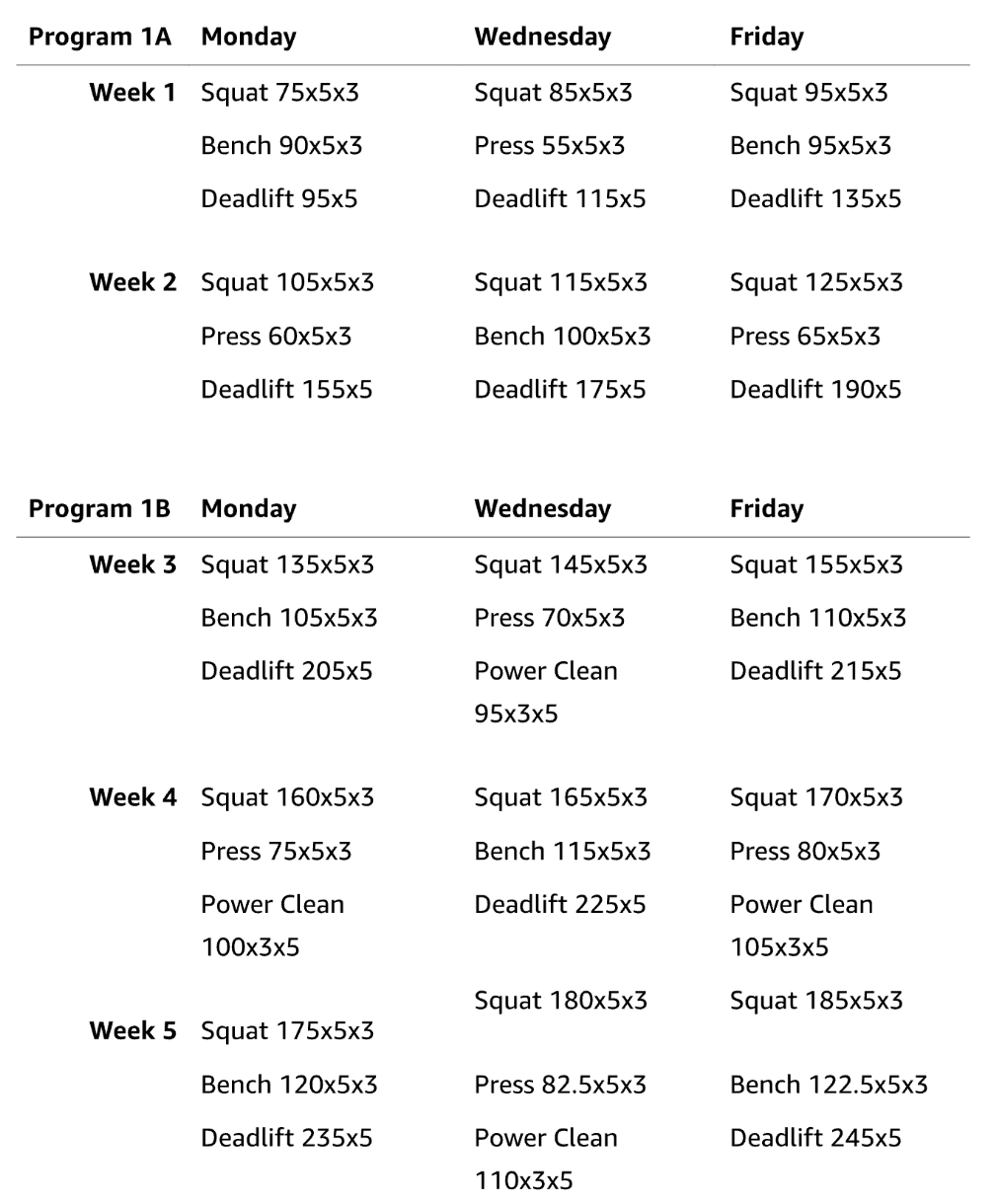
- The Starting Strength model prescribes a 3-day per week program that traditionally occurs on Monday, Wednesday, and Friday.
-
The point here is not to perscribe particular increases in weight but to illustrate that increases in loading will start out larger and then taper off.
-
If the trainee has been using the Starting Strength model (or some very close variation), the trainee will rarely if ever need to add additional work to the program in order to get progress going again. If the trainee is struggling to progress on the standard novice program, it will be for 1 of 3 reasons: 1. Excessive training stress within the workout. 2 Insufficient recovery between sessions. 3. Greed.
Chapter 20: The Novice Over 60 and Common Novice Variants
-
An athlete in his sixties, however, will be far more likely to require recovery intervals that extend beyond 72 hours and/or reductions in training volume, to make progress beyond the rank novice phase.
-
We find that bench presses affect presses less than presses affect bench presses, probably because presses exhaust the triceps more than bench presses. And once the reserves in the triceps are gone, all hope for effective benching during that session evaporates. For this reason alone, it makes sense to bench first and press second. Moreover, after heavy benches, the nervous system will be “primed” for a lighter pressing variation after dealing with the heavier weight of the bench at the beginning of the workout.
Chapter 21: The Novice Over 70 and Remedial Variants
- A program based around just two major barbell movements will seem quite limited – and it is – but still represents a full-body workout with the potential to produce massive increases in strength and preserve muscle mass and function. Bench presses work the pectorals, triceps, and deltoids. Deadlifts effectively train the hamstrings, glutes, quads, low back, upper back, forearms, and abdominals. That’s the lion’s share of muscle mass.
Chapter 22: The Intermediate Master
-
Even short breaks from training tend to be a more significant setback for older trainees. A week of missed training for the flu might mean 2 to 3 weeks of training just to get back to where he left off.
-
The design of intermediate programs for Masters also demands that we bear in mind some of the principles that we touched upon in the novice chapters, because they become even more important at this stage: 1. Masters need frequent breaks from very hard training. 2. Masters are volume-sensitive. They will not benefit from or even tolerate very high-volume workouts, or volume work done at a high percentage of 1 rep max. 3. Masters are intensity-dependent. They will detrain very quickly when intensity is reduced.
-
Objectives also provide focus: setting specific weight-rep goals for this year’s training, getting ready for a physically demanding vacation or sporting event, excelling at a particular physical pastime, meeting the requirements of a physically strenuous profession – all can provide motivation and drive the individuation and focus of an intermediate-level program.
-
Every time the athlete sets a new 5 rep max, the weight is increased by 2 to 5 pounds for the following week, but the rep goal for that week is reduced to a set of 3.
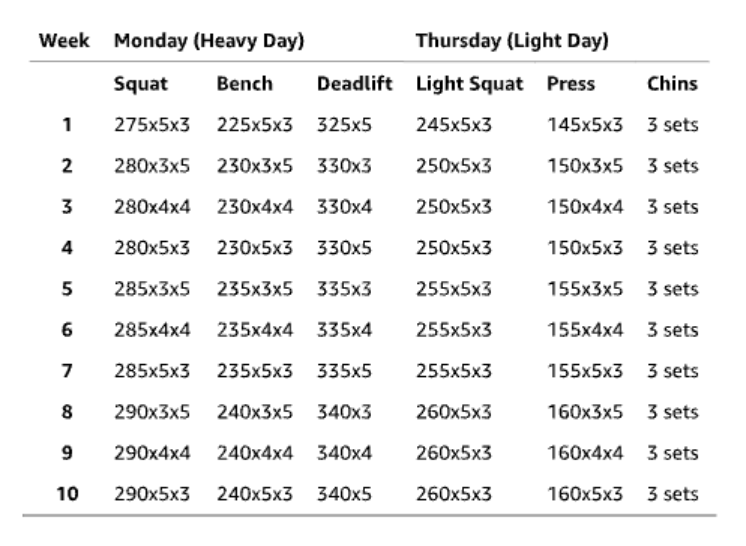
- For each cycle of 3 weeks the goal is to end by completing the target weight for 3 sets of 5 reps. Once this is achieved, 2 to 5 pounds are added to the bar for the next week, but the goal for the next week is not 3 sets of 5, it’s 5 sets of 3 reps. The total workload remains the same, but doing triples at the new weight is easier than doing 5s at the new weight. Again, this keeps weight on the bar and maintains total volume, but allows the Master a bit of physical and mental respite after achieving a new 3 sets of 5 maximum. The second week, the weight on the bar stays the same, and 16 reps are done using 4 sets of 4 reps. This additional rep for each set will be slightly more difficult than the previous week and paves the way for a new 3 sets of 5 personal record on the last week of the cycle. By this week, the trainee has handled this load on 2 previous occasions so he should be well-prepared, mentally and physically.
Chapter 23: The Texas Method
-
This approach is suitable for intermediate Masters who have made strength acquisition their primary athletic focus (as opposed to some other sport- or profession-specific goals), and who are willing and able to train on a fairly grueling program.
-
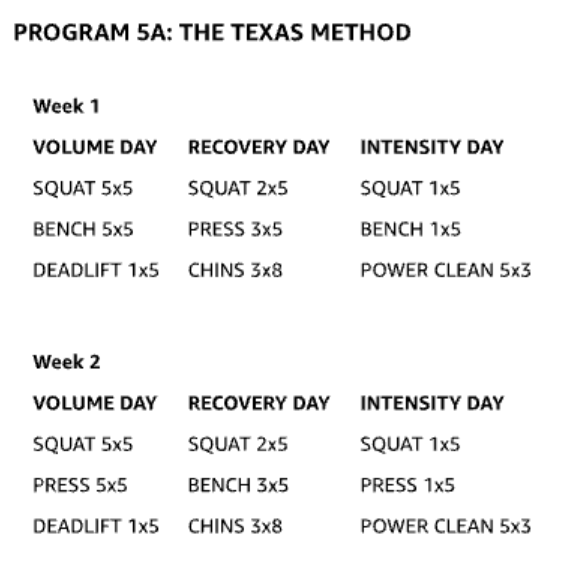
There are three fundamental components of a Texas Method program, reflecting the Stress-Recovery-Adaptation formulation of Selye’s syndrome. The overload event begins with volume day, when the primary training stress is delivered. Classically, volume day falls on Monday, which makes Monday even more challenging for the intermediate Master than it is for everybody else in the world. Without question, this is the most difficult workout of the week. Training stress is produced by performing the exercises at moderately high intensity and high volume, to produce a very high stress or “dose.” This level of training stress is now needed to force an adaptation. This level of stress will exceed the trainee’s capacity to recover and adapt before the next training session.
-
This brings us to recovery day, which traditionally falls on Wednesday. This will be familiar to those trainees forced to take a lighter squat day during the late stages of their novice progression. The idea now, however, is to actively promote recovery between difficult sessions while avoiding any level of stress that interferes with adaptation to the volume workout. The low-intensity, low-volume work of recovery day flushes tired muscles with blood and keeps motor pathways fresh between heavy sessions. It stimulates the ongoing biology of recovery triggered by volume day, without impeding it.
-
Adaptation over each cycle is manifested as intensity day, which typically falls on Friday. On intensity day, the targeted strength increase is displayed, but at low volume, so as to avoid excessive stress. Intensity day workouts usually call for just a single work set on each exercise. This is critical: Unlike the novice progression, where each workout both displayed a new level of strength and imposed a new training stress, in the Texas Method a different aspect of the cycle is emphasized in each session. Intensity day workouts are heavy and hard, to be sure, but not so much as volume day, and not so much as to prevent the delivery of a new, heavier volume training stress on the next Monday.
-
PRESCRIPTION: Weeks 1 and 2 are alternated. Squats and pressing movements on volume day are at 85 to 90% of intensity day targets. Recovery day squats and pressing movements are at 80 to 90% of volume day targets, at decreased volume, as shown. Adaptation with increased performance is displayed on intensity day – weight increases from one intensity day to the next (week to week).
-
The entire week’s work is focused on the realization of the intensity day goals.
-
Progressing on the Texas Method gets complicated sooner rather than later. The basic setup will not last forever. In fact, it likely won’t last longer than just a few weeks – possibly a few months if the trainee is recovering well. One of the biggest mistakes trainees of all ages make is trying to stay with an unmodified Texas Method template for far too long.
-
As the weight gets heavier, displaying new strength with a 5-rep set every week becomes increasingly untenable. Two alternate methods are presented for intensity day programming: running it out, and rotating rep ranges.
-
This is the simpler of the two methods. When the athlete can no longer achieve a single set of 5 reps, he will continue to add weight to the bar, but only aim for a set of 3 to 4 reps. He will continue to target 3 to 4 reps for as long as possible while continuing to add weight to the bar each week. This pattern will progress to intensity day with 2 or 3 heavy doubles instead of triples, and after several weeks or months the athlete will display adaptation with multiple heavy singles across five sets of 1 on intensity day.
-
Remember that volume and intensity are control knobs on the programming machine, and it is the appropriate modulation of these training variables that ensures steady progress.
-
Limited rest time is an important component of the dynamic effort method.
-
Five heavy sets of 5 (25 total reps) might take a athlete over half an hour to complete if rest times are about 5 minutes. However, the same volume (12 sets of 2) moved with maximum velocity might take less than 15 minutes to complete. This can be a very powerful new stimulus to boost an athlete out of a training rut.
-
Just as sets and reps on the Texas Method can get stagnant, so can the selection of exercises. Usually a stalled lift is best unstuck through modification of either volume or intensity. These changes can be applied to volume day, intensity day, or both. But sometimes an athlete is buried in such a rut on an exercise that nothing seems to work to get it going again. When this occurs, the substitution of a supplemental exercise may be indicated. A supplemental exercise will almost always be barbell-based and will resemble the parent movement both in performance and in load as closely as possible. Depending on the movement, and the degree of regression that may have set in on the primary exercise, the supplemental movement can be used as a replacement on either volume or intensity day.
Chapter 24: Heavy-Light-Medium and Split Programs
-
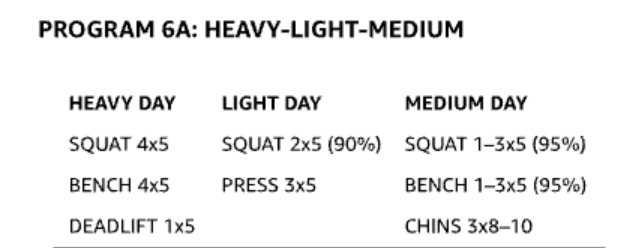
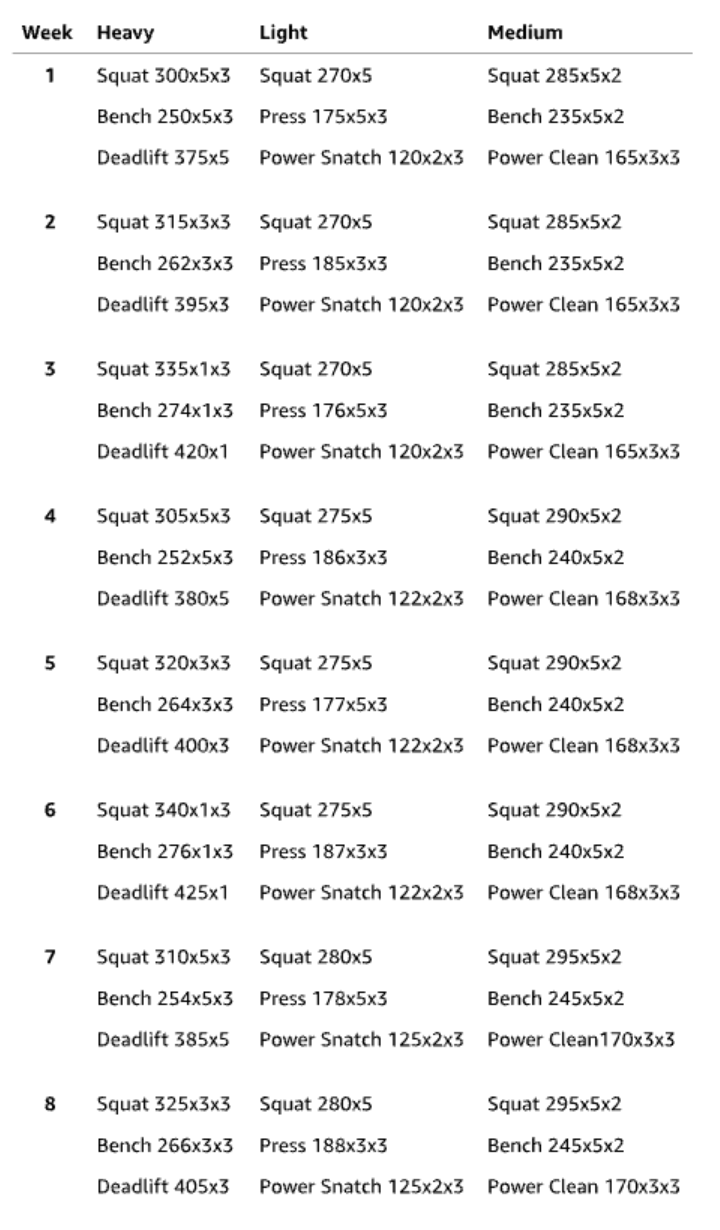
Heavy-Light-Medium programs spread the Stress-Recovery-Adaptation cycle over a one week training period to produce a versatile intermediate training approach that is less grueling than the Texas Method and therefore more suitable for the majority of Masters.
-
The two methods look remarkably similar, but key differences make Heavy-Light-Medium programs less stressful and easier on recovery.
-
In the Heavy-Light-Medium system, the heavy day is the focal point of the program.
Chapter 25: The Advanced Master
-
Training at this level is not conducted for health or fitness, but rather to optimize performance for competition.
-
PROGRAM 7A: TWO STEPS FORWARD, ONE STEP BACK
- Week 1: PREPARATORY LOADING – Moderate-to-high volume, moderate intensity.
- Week 2: PRIMARY LOADING – Highest volume; highest intensity possible at that volume.
- Week 3: DELOADING – Low volume, low intensity.
- Week 4: PERFORMANCE – Very low volume, very high intensity.
-
This approach keeps both volume and intensity at appropriate levels, but creates enough fluctuation that the trainee does not go stale over the course of a long series of repeated cycles.
Chapter 26: Conditioning
-
Conditioning, also known as endurance training or “cardio,” is an essential component of the complete exercise prescription, magnifying the metabolic, cardiovascular, and performance benefits of strength training. Conditioning is far more sport- and vocation-specific than strength training, and for many athletes the best training recommendation is to “lift weights and play your sport.” For Masters who practice low-intensity sports or who train solely for health, however, this prescription does not suffice. Evaluation of the various modalities available through the prism of our exercise prescription criteria indicates that high-intensity interval training (HIIT) alternatives are superior to low-intensity, long slow distance exercises. Conditioning at high intensity confers the health benefits of low-intensity training in less time, while producing less interference with strength training and promoting more comprehensive bioenergetic and performance adaptations. Multiple modalities for HIIT conditioning are available. The authors prefer sled work for its simplicity and lack of eccentric component. Intervals with Concept2 rowers, Airdyne bikes, and standard stationary bikes are also recommended.
-
You will recall that our complete prescription for the Masters athlete incorporated both strength and conditioning components. The best data available suggests that this combination improves the general health and performance benefits of either modality alone.
-
But strength training is a means to an end, not an end in itself. The objective is strength for life: membership in a recreational sports league, skiing in the Rockies, or hiking along a nature trail with your beloved. Strength is always necessary, but it isn’t always enough to ensure such activities are accessible and enjoyable. Once the foundation of strength is built, it must be complemented by appropriate conditioning, so the athlete can use that strength to engage in meaningful physical activities outside of the gym.
-
Significant fat loss doesn’t happen in the gym. It happens at the dinner table.
-
Attempts to “run off” a beer belly will sacrifice knees, ankles, and low backs in the process. Even worse, such high-volume conditioning will be detrimental to building and maintaining strength and muscle mass. That is a fool’s trade-off.
-
Our conditioning component must be safe. Our conditioning component must have a broad therapeutic window. Our conditioning component must be as comprehensive as possible. Our conditioning component must specifically and effectively combat the Sick Aging Phenotype. It should also be as specific as possible to the physical demands confronted by the individual athlete. Our conditioning component should be as simple and efficient as possible.
-
To meet the criterion of safety, our general conditioning prescription must meet certain parameters. It should be low in volume, to reduce interference effects, minimize residual fatigue, and avoid overtraining. It should incorporate low-impact, repeated motor activities requiring minimal technical proficiency. For example, pedaling on a stationary bike is a simple movement pattern that does not require practice, does not expose the athlete to unpredictable or impulsive forces, and does not excessively stress the involved joints. Our conditioning exercise will ideally avoid eccentric movement patterns, which produce soreness and interfere with recovery from strength training. Here, again, pedaling a stationary bike is a good example, as is pushing or pulling a sled. Jogging, running and sprinting do not fit the bill. A simple, stable, repetitive, low-impact exercise that produces the least soreness will be the safest.
-
So it seems that strength training should be generalized while conditioning should be specific, reflecting the power-capacity demands of the sport or profession. And we maintain that this is true for sport- and profession-specific performance. For most athletes, therefore, the prescription of a strength and conditioning program is simple: lift weights and practice your sport. From the standpoint of overall fitness for life, however, it’s just a little more complicated than that.
-
Consider a second example, that of a golfer. It’s ridiculous for his strength training program to specifically emulate the movements of his sport. We’re not going to have this poor bastard start swinging a 5-pound club for his rank novice program and try to work our way up to a 150-pound club…because that would be stupid.
-
Thus, our General Exercise Prescription mandates a low-volume, high-intensity conditioning program, sometimes called a GPP (general physical preparedness program). Such a program specifically and effectively addresses the Sick Aging Phenotype while also fulfilling the requirement of a comprehensive preparation for a broad range of power-capacity demands.
-
In HIIT, the trainee engages in short bouts of very intense effort alternated with short periods of rest. Bike intervals are a classic example. On the stationary bike, set at moderate-high resistance, the athlete pedals as hard and as fast as possible for, say, 60 seconds. This will suck a bit. The athlete then rests, or pedals lightly, for 60 seconds. Then he goes all-out for another 60 seconds. Then he rests again. The pattern is repeated about 4 to 8 times. This approach has been studied extensively and compared to more traditional long slow distance aerobic training. The cardiovascular and performance adaptations produced by high-intensity training are similar, and in many cases superior, to those produced by continuous endurance training.
-
Another metabolic benefit of HIIT, especially for those concerned with fat loss, is known as excess post-exercise oxygen consumption. HIIT training results in an elevated rate of oxygen consumption, and associated energy utilization, well after the training bout is over. This increased oxygen consumption and caloric expenditure is associated with the energy demands of restoring homeostasis in the muscle – repletion of energy stores, elimination of reaction products, repair of microtrauma, and adaptive responses. This “extended burn” draws on the favored fuel for oxidative metabolism – triglyceride – and promotes fat loss.
-
Sleds are the ideal implement for HIIT, fulfilling all of our exercise prescription criteria. Prowlers and other sleds are safe. Sled-pushing is a low-impact, repetitive motor activity performed on a stable surface, and it has no eccentric component, meaning there’s no delayed soreness. In fact, many report that the concentric-only activity of sled pushes actually helps to dissipate soreness and improve the rate of recovery after heavy lower body work.
-
There are anecdotal reports of strained calves and Achilles tendons from sprint work with loaded sleds. If this is a concern, the athlete can simply walk the sled. While not as hard as a sprint, this is no easy task in itself. Sleds, especially those constructed like the Prowler (which can accommodate standard barbell plates), have a wide therapeutic window, and are subject to dosing manipulations via several variables: load, speed, distance, rest intervals, total volume, and frequency, allowing the construction of a rational conditioning program tailored to individual needs and abilities. Athletes can begin pushing an unloaded sled a short distance at a slow pace once a week, and work their way up to multiple sprints over longer distances with heavy loads and short rest intervals. Dosing can be further modulated by the incorporation of heart-rate-guided protocols, such as those described by Reynolds and Bradford.
-
Sled work can be done either “heavy and short” or “light and long.” Optimal conditioning levels are likely best attained by a combination of both, perhaps alternated by session. Short sprints with heavy weight can be effective in as little as 10 yard increments. Longer sprints are typically done between 40 to 60 yards with lighter weights.
-
Dragging the sled is another terrific option, and it fits our exercise prescription for exactly the same reasons cited above for sled pushes.
-
Like the sled push, the drag is a concentric-only exercise that does not produce soreness. Light sled drags are an excellent way to speed recovery after heavy lower body work.
-
Drags are not quite as intense as pushes. Sled drags are typically done for total time (e.g., drag a moderate weight for 15 to 20 minutes without stopping) or done for longer intervals (50 to 100 yard interspersed with brief rest periods). But like pushes, weight, distance, rest intervals, and total volume can all be manipulated to increase or decrease the dose and specificity of the exercise. Sled drags do have some advantages over pushes. With light weights, drags allow for a very upright posture and long strides, extremely beneficial to the development of the hamstrings. This can be a useful variation for a lifter who struggles with squat depth, due to a weak posterior chain. It allows for extra work to the area without producing heavy soreness in the way that extra squatting and deadlifting might cause.
-
Rowers and bikes are both safe, being low-impact, predominantly concentric exercises on stable surfaces. The lack of a foot-strike makes them excellent choices for trainees recovering from certain types of lower body injuries. Both have fairly wide therapeutic windows. Opportunities for manipulation of intensity, volume and other training variables are similar to those for sleds.
-
As forms of HIIT, both modalities impose comprehensive conditioning stresses, and both are specific to and effective against the Sick Aging Phenotype, for reasons we have already treated at length. Finally, both modalities are simple and efficient. An easy way to begin is with simple 1 minute-on and 1 minute-off protocols for 10 to 15 total minutes.
-
The most useful feature of a treadmill is the ability to place the machine at an incline.
-
It is most useful to utilize the degree of incline and not the speed of the machine to manipulate the difficulty of the exercise.
-
Running and jogging do not meet the criteria of our exercise prescription and are not recommended. Although running and jogging are certainly not particularly dangerous, they are high-impact exercises with prominent eccentric components, frequently performed outside on variable grades, and therefore are not as safe as other alternatives. These activities promote muscle soreness and fatigue, which will blunt the Master’s recovery capacity. The negative orthopedic effects on the ankles, knees, and low back of the Master are unavoidable with these modalities.
-
Running and jogging are certainly simple activities, but they are hardly efficient. As we have seen, the health and performance adaptations produced by running and jogging are also conferred by HIIT protocols, and in a fraction of the time.
-
If you are a Master and you are passionate about running or some other long slow distance activity, we say to you: that’s your sport, and that’s great. Lift weights and play your sport. You won’t get as strong as you could be, but you’ll be stronger, and you’ll be doing what you like to do, and you’ll do it better when you’re stronger. But we cannot recommend these activities as conditioning components of our General Exercise Prescription for the Masters Athlete.
-
Some Crossfit boxes are run by excellent coaches who understand how to modify and adapt the protocols for Masters Athletes. In general, however, Crossfit does not meet our exercise prescription criteria, and is not a wise conditioning option for Masters, who have no business doing high-repetition deadlifting in a state of fatigue, high-repetition box jumps, or heavy snatches for time. Masters shouldn’t be using rings for dips or kipping their pull-ups. A highly individualized Crossfit program run by an experienced, well-informed, and careful coach might be appropriate for a few trainees in their 40s.
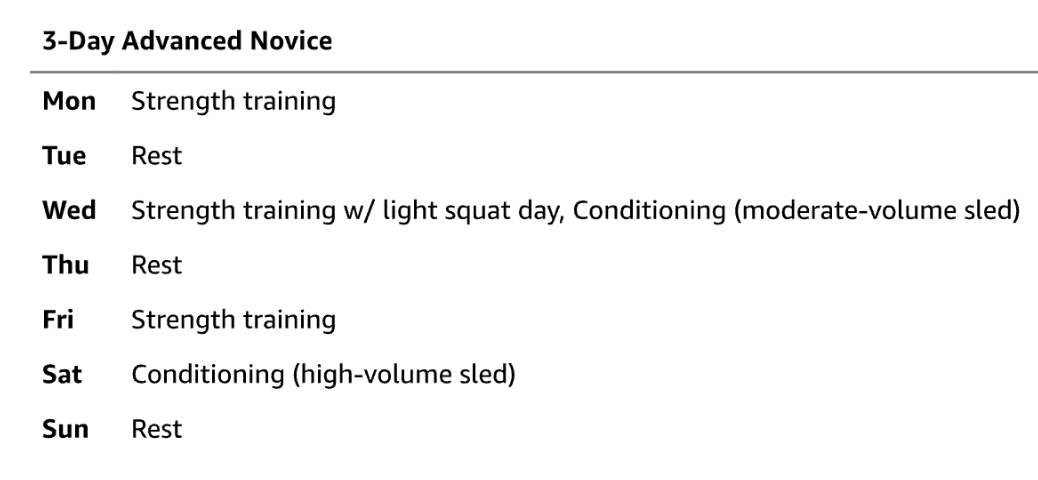
-
The benefit of walking is that it isn’t very stressful. The downside is that it isn’t very stressful. This means that, very quickly, simply walking more isn’t going to produce progressive improvements in conditioning. Walking is not particularly subject to volume manipulation for progression, and just walking more often will be of limited value.
-
Even for most novices, after several weeks of consistent daily walks, it will no longer serve as an effective conditioning stimulus, but rather as active rest. Increased levels of conditioning will only be achieved through more intense modalities.
Chapter 27: The Female Master
-
Female athletes have less strength, neuromuscular efficiency, power production, and muscle mass than men, and have less upper body strength relative to lower body strength. On the other hand, they are able to perform multiple repetitions at a higher percentage of their 1RM, tend to recover faster, and can tolerate higher training frequency and volume overall. Many female Masters can use the programs presented in this book as written. When indicated, the most common modifications for the female Master will be to switch from a 3 sets of 5 to 5 sets of 3 set design for high-volume training stress, switch from sets of 5 to sets of 1 to 3 for high-intensity and low-volume training stress, and increase the volume or frequency of deadlifts.
-
Life is not fair, and the aging female loses muscle, bone, and strength at a greater rate than her male counterparts.
-
In all cases, the fundamentals will remain the same: regular training, with a view to long-term progressive improvements in the General Fitness Attributes, proper performance of a small set of big multi-joint barbell exercises, assiduous attention to recovery factors, and proper record-keeping and analysis. Above all, athlete and coach must always bear in mind the underlying structure of any rational exercise prescription: the Stress-Recovery-Adaptation cycle.